
Top Wall Street insiders are signaling that even a single unexpected interest rate shift by the Federal Reserve could ignite widespread market volatility and investor panic due to stretched valuations, record leverage, and fragile economic signaling. With key indicators flashing caution and recent Fed actions stirring unease, investors should understand how rate policy can trigger rapid market reactions — and how to navigate risk responsibly.
In late 2025, the Federal Reserve enacted a key rate cut — the third in succession — lowering the federal funds rate to a range of approximately 3.50–3.75%. This move was welcomed by markets, but among seasoned Wall Street professionals, it provoked serious caution. Experts warn that even one unexpected interest rate shift — whether a hike or an unanticipated cut — has the potential to send shockwaves across global financial markets.
Understanding why this matters, and what could unfold next, requires a deep dive into how markets are structured today, how monetary policy affects investor behavior, and what insiders are quietly watching behind the scenes.
Why One Rate Change Can Matter More Today Than Ever
Monetary policy decisions by the Federal Reserve influence almost every corner of the financial system — from mortgage costs to corporate borrowing and investor asset pricing. The market reaction is not always linear; unexpected or poorly communicated moves often have outsized effects. Research shows that markets not only react after a rate change, but can exhibit measurable volatility before the announcement as traders anticipate shifts.
Historically, the most extreme market reactions occur when:
- A rate decision was not aligned with consensus expectations.
- Economic data contradict what markets have priced in.
- Central bank communication is unclear or contradictory.
In 2025 alone, mixed jobs data, persistent inflation, and ongoing global trade pressures created a context where rate policy decisions could spark outsized movements in risk assets.
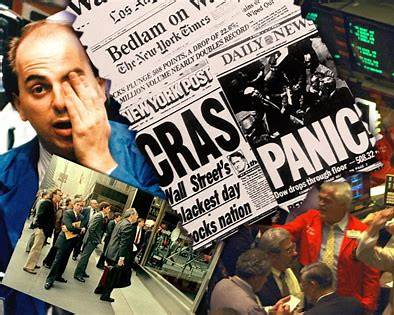
Market Leverage Levels Are Worrisome
Record levels of margin debt — money borrowed by investors to buy securities — are an additional stress point. According to FINRA, U.S. margin debt recently hit an all-time high of over $1.1 trillion, with past spikes often preceding market drawdowns.
When markets stretch higher on leveraged bets:
- A small catalyst can lead to outsized selloffs.
- Stop-loss orders cascade, accelerating declines.
- Liquidity dries up quickly, amplifying volatility.
A nervy interest rate pivot — even by 0.25 percentage points — can therefore act as a “trigger,” not because it’s large by historical standards, but because the market’s risk positioning amplifies its effect.
What Wall Street Insiders Are Saying Right Now
Mixed Signals from the Fed Raise Anxiety
Although the Fed recently cut rates and signaled only one expected cut in 2026, the committee was divided internally. Such discord can make markets jittery because it implies policy uncertainty.
Strategists Warn of Potential Pullbacks
Even top strategists caution that recent rallies could be followed by a lull or correction if expectations around rate cuts shift. Investors who chase momentum without accounting for policy risks may be caught off guard.
Debt and Valuations Are Flashing Red Lights
Economists and investors are tracking multiple recession and valuation signals — from debt accumulation to stretched equity price/earnings ratios — that often precede major market corrections.
Real-Life Scenarios: What Could Happen
Scenario 1: Unexpected Hike Shock
Imagine inflation unexpectedly surges, forcing the Fed to raise rates instead of cutting. Even a small hike could:
- Push up borrowing costs for households and businesses.
- Trigger margin calls in leveraged accounts.
- Lead to a selloff in high-growth, credit-dependent stocks.
This mirrors past market shocks where surprise rate decisions jolted investor confidence.
Scenario 2: Abrupt Halt to Rate Cuts
If markets are pricing in multiple rate cuts and the Fed signals a pause — as occurred recently — stocks can react negatively because the “expected easing” is no longer guaranteed.
Scenario 3: Global Rate Divergence
If major central banks (like the Bank of Japan) move rates in the opposite direction of the U.S., global capital flows can shift suddenly, adding strain to emerging markets and risk assets.
How Investors Can Respond (Practical Advice)
Investors don’t control rate policy, but they can control risk management strategies to navigate uncertainty.
1. Diversify Across Asset Classes
Spread risk among equities, bonds, commodities, and alternative investments. Diversification can reduce the impact of sudden volatility in any single asset class.
2. Monitor Economic Data, Not Headlines
Key indicators — jobs reports, inflation trends, GDP growth — often move markets more than political commentary. Base decisions on data trends rather than speculation.
3. Focus on Quality Over High Risk
In unsettled times, companies with strong balance sheets, consistent earnings, and low debt tend to weather volatility better than highly leveraged growth firms.
4. Review Margin Exposure
High leverage can magnify losses. Reducing margin exposure during periods of uncertainty helps protect capital and reduces the likelihood of forced liquidation.
5. Maintain Liquidity
Having cash or cash-equivalent assets allows investors to take advantage of opportunities during market selloffs instead of being forced to sell into panic.
Trending FAQs: Answered by Experts
1. Could just one rate change really trigger panic?
Yes. Markets often price in expectations well ahead of time. A rate change that deviates from expectations can trigger rapid re-pricing and volatility.
2. Are rate cuts riskier than hikes?
Both cuts and hikes can cause panic if they contradict market forecasts or signal deeper economic weakness.
3. How does the Fed communicate changes?
Through policy statements, press conferences, and economic projections. Ambiguous messaging can increase market volatility.
4. What asset classes tend to benefit when rates fall?
Historically, equities and real estate often perform well with rate cuts, while bonds can rally due to lower yields.
5. Do rate changes affect jobs and inflation?
Yes — cuts are designed to stimulate employment, while hikes aim to slow inflation. Timing and magnitude of the change are crucial.
6. Is this the first time markets have been so sensitive?
No. Recent high leverage, widespread quantitative easing, and elevated valuations have made markets more sensitive than in past decades.
7. Should ordinary investors react to Fed forecasts?
It’s more effective to track actual economic data trends rather than speculative forecasts or market chatter.
8. What sectors are most rate-sensitive?
Technology, utilities, and high-growth sectors tend to be most impacted by changing rates.
9. Can global markets amplify U.S. rate effects?
Yes — diverging policies abroad can exacerbate liquidity issues and increase risk-off sentiment across global markets.
10. What’s the best way to mitigate panic-driven losses?
Strong diversification, disciplined risk controls, and proactive rebalancing can help preserve capital during volatility.
Conclusion: The Power of One Change
The notion that one rate change could trigger a market panic is not hyperbole. It’s grounded in market structure, investor psychology, and the leverage-intensive environment of today’s financial system. Today’s elevated debt levels, high valuations, and policy uncertainties make markets highly sensitive.
Being prepared — intellectually and strategically — is the best defense against sudden volatility. By understanding risk catalysts and taking disciplined measures, investors can navigate turbulent periods without succumbing to panic.