

1. 📈 Why Options Income Is Surging
- Volatile markets: With tariff tensions, rising rate uncertainty, and tech concentration, active strategies that yield premium income are in demand—as passive equity fund flows declined 8%, while actively managed ones saw a 57% surge through H1 2025
- Fixed income drag: With Treasury yields normalizing, investors seek alternative income engines.
- Simplified access: Brokerages now make covered call and put-selling accessible to retail investors willing to learn risk.
2. Core Income-Generating Strategies
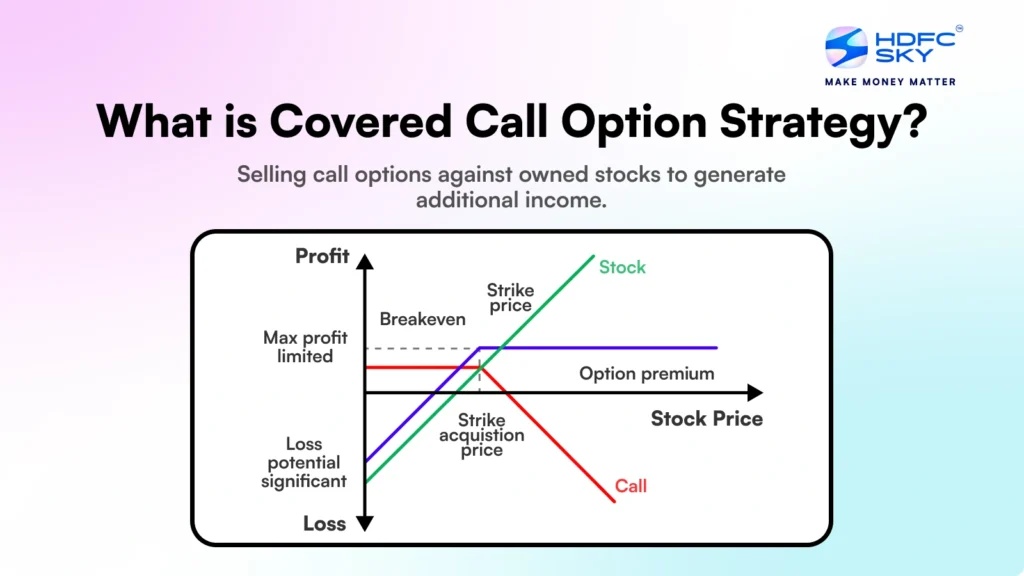
✅ Covered Calls
Hold stock and sell (write) a call option on it. You collect premiums while capping upside.
Example: Own 100 shares of Apple, sell a March $185 call, collect ~$1,575 → ~9% yield while willingness to sell at $185
Pros: Steady income, reduced volatility, useful in sideways markets .
Cons: Caps upside, appreciates less in bull markets, potential tax drag .
✅ Cash‑Secured Puts
Sell a put while holding enough cash to buy the underlying if assigned. You collect option premiums with downside exposure equivalent to stock ownership at strike.
Ideal if you’re willing to buy the stock at a discount and earn income in the meantime
✅ Collars
Combine a covered call with a protective put: you sell a call to generate income and buy a put to limit downside. It’s a conservative trade-off—lower income, but downside insured
✅ Calendar Spreads
Sell a short-term call while holding a longer-term call at the same strike. You exploit time decay to earn income while retaining some upside
3. Income-Focused ETFs Using Option Strategies
For investors who prefer passive approach, numerous ETFs deploy covered call strategies:
🧾 Popular Covered-Call ETFs
| ETF | Strategy | Yield | Tactic |
|---|---|---|---|
| XYLD (Global X S&P500 Covered Call) | Monthly at-the-money calls on S&P 500 | ~9.4% forward yield | High income, capped upside |
| QYLD (Nasdaq 100 Covered Call) | Same on Nasdaq 100 | Similar yield | Tech-heavy exposure |
| JEPI & DIVO | Active covered calls on dividend stocks | ~8–9% SEC yield | Income + equity exposure |
| Westwood Salient Midstream & Energy ETFs | Covered calls + dividends on energy stocks | ~9.9–12.2% yield | Income with sector tilt |
| ProShares Daily Covered Call ETFs (ISPY, IQQQ) | Daily call selling | ~11.9% index yield | Income + better upside capture |
Performance caveat:
Monthly covered call ETFs lag during bull markets—they’ve earned only ~⅔ of S&P or Nasdaq over long periods . Daily covered call ETFs aim to improve that balance by resetting upside each day
4. When & Who Should Use These Strategies
- Stable to mildly bullish markets: Ideal for covered calls and put writing to harvest premiums.
- Income-seeking investors: Retirees and cash-flow-focused portfolios like regular distributions.
- Investors with conviction: Comfortable with potentially being called away or assigned shares.
- Risk-aware investors: Willing to accept capped upside and manage tax/transaction costs.
Not suitable for those chasing high capital gains in bull runs or unfamiliar with options mechanics
5. Tradeoffs & Tax Considerations
- Underperformance in strong rallies: Capped returns can drag; monthly strategies often lag by 30–50% of index gains
- Tax inefficiencies: Premiums taxed as income; frequent trades may trigger short-term capital gains
- Volatility reliance: Premium income tends to drop when IV is low; rising volatility increases premiums.
- Complexity: ETF wrapper simplifies, but direct strategy requires active management of strike choices, expirations, rollovers.
6. Battle-Tested Best Practices
- Combine equity with premium income: Understand tradeoffs between yield and upside potential.
- Choose liquid stocks or ETFs: Better bid-ask, more reliable premium.
- Strike selection matters: Near-expiry/weeklies have higher theta but more assignment risk.
- Use collars or daily resets: Mitigate downside or regain upside
- ETF diversification: Combine S&P, sector, daily-call, and actively managed funds for balance.
- Tax-aware execution: Use tax-sheltered accounts when possible; model expected impact.
- Stay educated: Keep up with broker option level approvals, margin requirements, and strategy shifts.
7. Real-World Income Insights
- Westwood Energy ETFs launched in April 2025 maintain ~10–12% yield monthly with energy sector focus .
- JPMorgan JEPI and Amplify DIVO have proven resilient in downturns while providing 8–9% yields via equity-linked notes and covered calls
- ProShares ISPY (daily calls) generated ~11.9% index yield since inception plus ~13.6% NAV return—suggesting income with upside breathing room
8. Advanced Tweaks & Tips
- Stock selection: Choose blue-chip, low-volatility, dividend-paying stocks (AAPL, JNJ, VZ, COP) for smoother income .
- Thematic focus: Energy and midstream stocks paired with options earned ~12% yields .
- Balance with puts: Using collars or cash-secured puts adds protection below income.
- Monitor implied volatility (IV): Sell calls when premiums rich; avoid when IV low.
- Use rolling: Adjusting strikes and expiries to optimize income vs. risk.
9. Pitfalls to Avoid
- Ignoring total returns: High yield doesn’t equal better long-term gains—especially in rally phases .
- Overconcentration: Avoid overweighting in a single sector ETF.
- Broker limitations: Options require documented approval levels and margin.
- Illiquidity: Avoid thinly traded options or obscure stocks.
- Commissions & taxes: Monitor cost drag and effective yields.
10. Looking Ahead: What’s Next?
- Growth of option-ETF inflows: Option-income ETF AUM reached ~$97B by end-2024, with $5.6B inflows in Jan 2025
- New products: Daily covered-call and equity-linked note offerings aim to improve return/income tradeoffs
- Increased advisor adoption: Options funds are being pitched as income-generating alternatives to traditional fixed income
- Dynamic volatility environment: Elevated IV may continue boosting premiums but also heightens assignment and roll risks.
✅ Final Takeaway
Covered calls, cash-secured puts, collars, calendar spreads, and their ETF-based implementations offer attractive income paths for U.S. investors—but they require understanding the trade-offs. When executed thoughtfully:
- They deliver 4–12%+ yield in current markets.
- They can tilt portfolios toward stability and income.
- They demand awareness of capped upside, complexity, and taxes.